


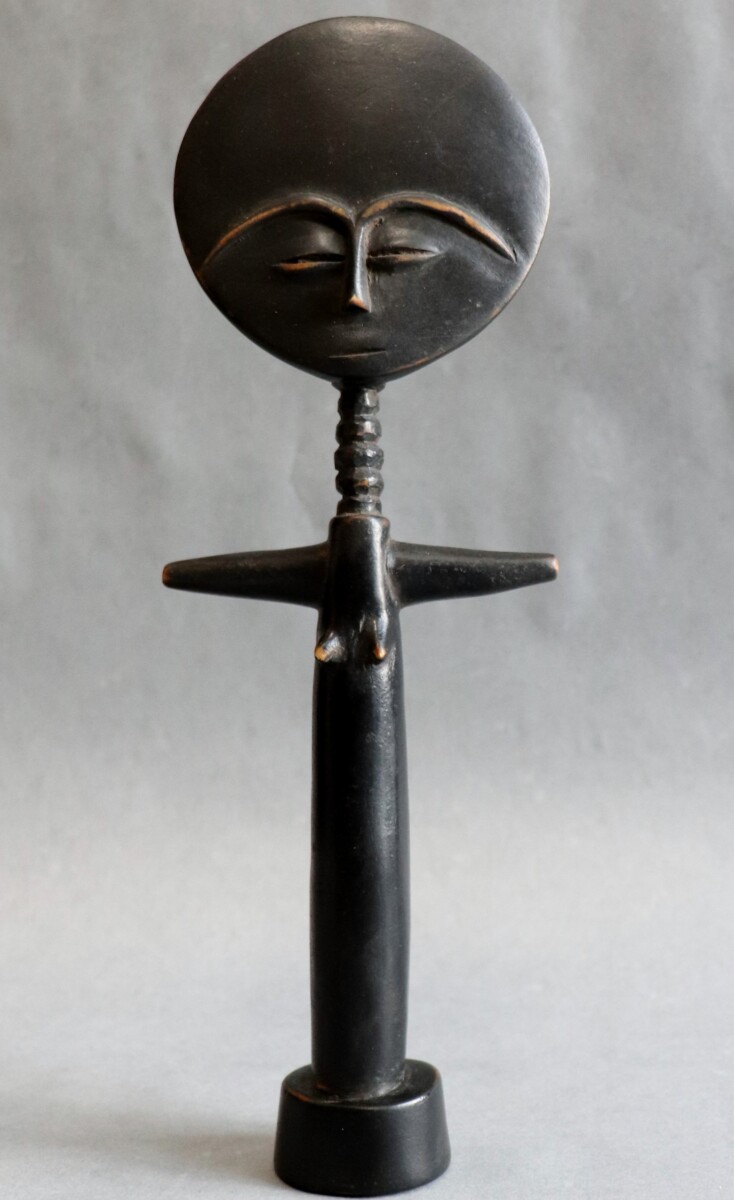
African Fertility Dolls
Fertility dolls are ritual and symbolic objects associated with fertility, motherhood and the transmission of life. Found in a wide variety of forms across several regions of Africa, they are generally represented as female figures with simplified or stylised features. The body is often elongated or schematically rendered, sometimes emphasising attributes associated with femininity and motherhood. Particular attention is also given to the head and hairstyle, which may provide insight into the aesthetic and social codes of a particular community. Some dolls are adorned with beads, fibres, leather, pigments or textiles.
According to local traditions, these figures could be carried, kept or used by young women in rituals associated with marriage, the desire to have children, pregnancy or preparation for motherhood. They could also be regarded as protective objects or as embodiments of wishes for childbirth and the prosperity of the family.
Far from being mere toys, these dolls therefore bear witness to the importance attached to fertility, motherhood and the continuity of the community. Their meaning varies, however, according to the people, region and cultural context: there is no single function shared by all objects referred to as “fertility dolls”.